· Published by Moment Keeps Gifts · September 16, 2026
Custom Acrylic Magnets: What You Are Actually Buying
Quick answer: What acrylic does that paper, wood and glass do not, how strong the magnet needs to be, what crazes the surface, and the four situations where acrylic is the wrong choice.
Last updated October 06, 2026.

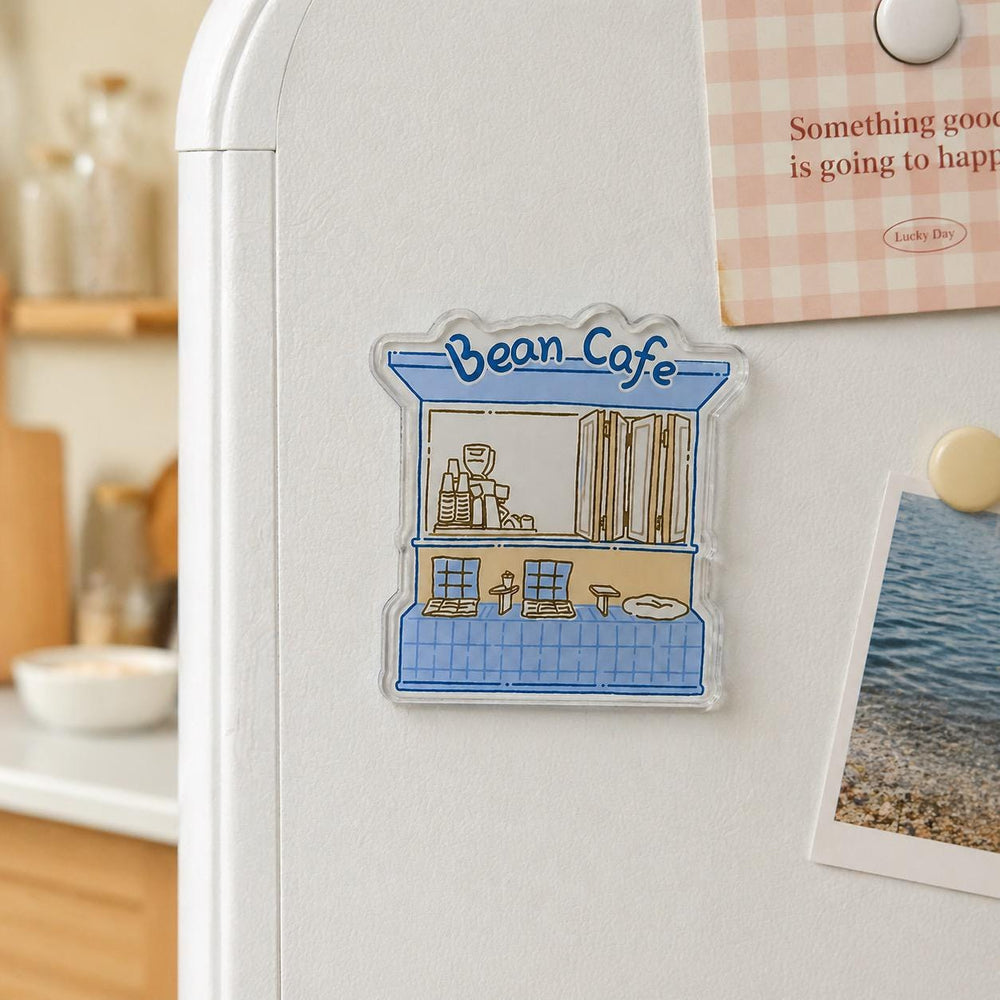
Search for acrylic magnets and every shop shows you the same thing: a photograph of a nice-looking object on a nice-looking fridge. Almost nobody tells you what the material actually does, how strong the magnet needs to be, or when acrylic is the wrong answer.
This is the version we would want if we were buying rather than making.

What acrylic is, and why it ends up on fridges
Acrylic is PMMA — the same clear sheet used for shop signage and picture glazing. Three properties are why it keeps winning this particular job:
- It has depth. Light travels a few millimetres through the sheet before it reaches the artwork, which is why the image looks set into the piece rather than printed on top of it. This is the entire reason it reads as expensive.
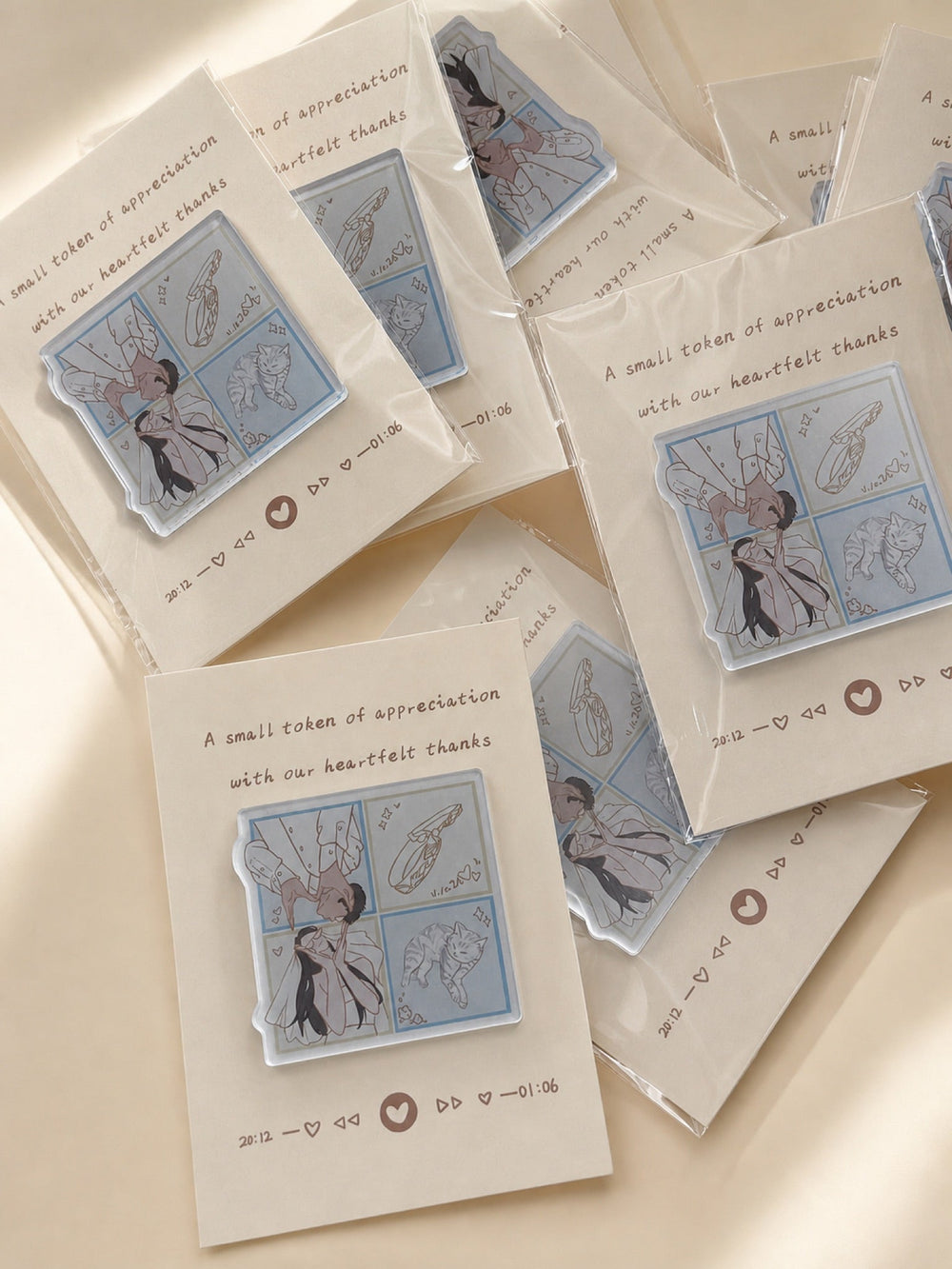
- It cuts to any outline. A sheet can follow the silhouette of a building, a couple, a comic panel. Paper and vinyl can too; wood and glass fight you.
- It has mass without fragility. Enough weight to feel like an object, not enough to break when it slides off a door onto a tiled floor.
What it is not: indestructible, scratch-proof, or the cheapest option per piece. All three matter below.
The four materials people actually compare
Paper and photo magnets
The cheapest per piece by a wide margin, and genuinely the right call for large quantities. The trade-off is that the print sits on the outer surface, so it scuffs where fingers land, and the corners lift after a year in a kitchen that gets steamy. Think of them as consumable. If a guest throwing one away in eighteen months would not bother you, this is the sensible choice.
Wood
Warm to hold and the nicest option if the design is bold and simple. The difficulty is fine detail: grain is a texture the artwork has to compete with, and thin printed lines lose definition on a porous surface. Edges also chip along the grain rather than scuffing evenly.
Glass
People searching for “glass magnets” are usually describing the look they want, not the material. Glass gives the deepest optical effect of anything here — and then you have to post it. It is heavy enough to change your shipping cost and brittle enough that some percentage of a bulk order will not survive the journey intact.
Acrylic
Sits between them. Most of the optical depth of glass, most of the shape freedom of paper, none of the breakage in transit. It costs more per piece than paper and less than you would expect against glass once postage is counted.
Thickness, briefly
Thicker acrylic means more depth and a heavier feel; thinner means lower cost and a lighter piece on the door. It also decides whether the outline can follow the artwork or has to stay square. We wrote the full comparison separately — see the 3mm and 5mm guide rather than guessing from a photograph.
You can also compare finished 3mm acrylic magnet examples with 5mm custom-shape examples to see how the format affects the result.
How strong does the magnet need to be?
Less than people assume, and the question is usually the wrong way round. A decorative magnet has to hold its own weight and stay put when the door swings. It does not need to pin a stack of paper — that is a different product with a much stronger magnet and a much less pleasant feel in the hand.
The failure people blame on the magnet is almost always the fridge. Many modern stainless-steel doors are made from an austenitic grade that is not magnetic at all, which is why nothing sticks to some otherwise ordinary-looking kitchens. There is a ten-second test: put any existing magnet on the door. If it falls, no magnet from anyone will hold, and a gift that needs a fridge is the wrong gift for that household.
What it survives, and one thing it does not
Kitchen heat and steam are fine. Sun through a window is fine — acrylic is what museums glaze with, and it does not yellow the way cheap plastic does. Being knocked off the door is fine.
The one real hazard is the cleaning cupboard. Ammonia and alcohol-based cleaners craze acrylic — the surface develops a network of fine cracks that cannot be polished out. This includes most blue glass cleaner. A damp cloth is genuinely all it needs, and this is worth a line on the card if you are giving these to people who clean thoroughly.
When acrylic is the wrong choice
- You need several hundred at the lowest possible unit cost. Paper wins and it is not close. Spend the difference on something else.
- It has to go inside a standard letter. Thickness pushes an envelope into a higher postage bracket. Hand-delivered or parcel-posted, no issue; slipped into a letter with an invitation, check the rate first.
- You want the object to age. Acrylic stays the way it arrived. If the appeal is patina and wear, wood is the honest answer.
- The recipient has no magnetic fridge. See the ten-second test above.
Related reading
- from photo to finished acrylic magnet
- client gifts for small businesses
- see your design before you order
If acrylic is the right answer
What you are paying for is the depth, the custom outline and the fact that it will look the same in five years. What you are not paying for is indestructibility — keep the glass cleaner away from it and it will outlast the occasion by a decade.
Browse personalized acrylic magnets, or send a photograph and we will show you a digital proof before anything is made.